
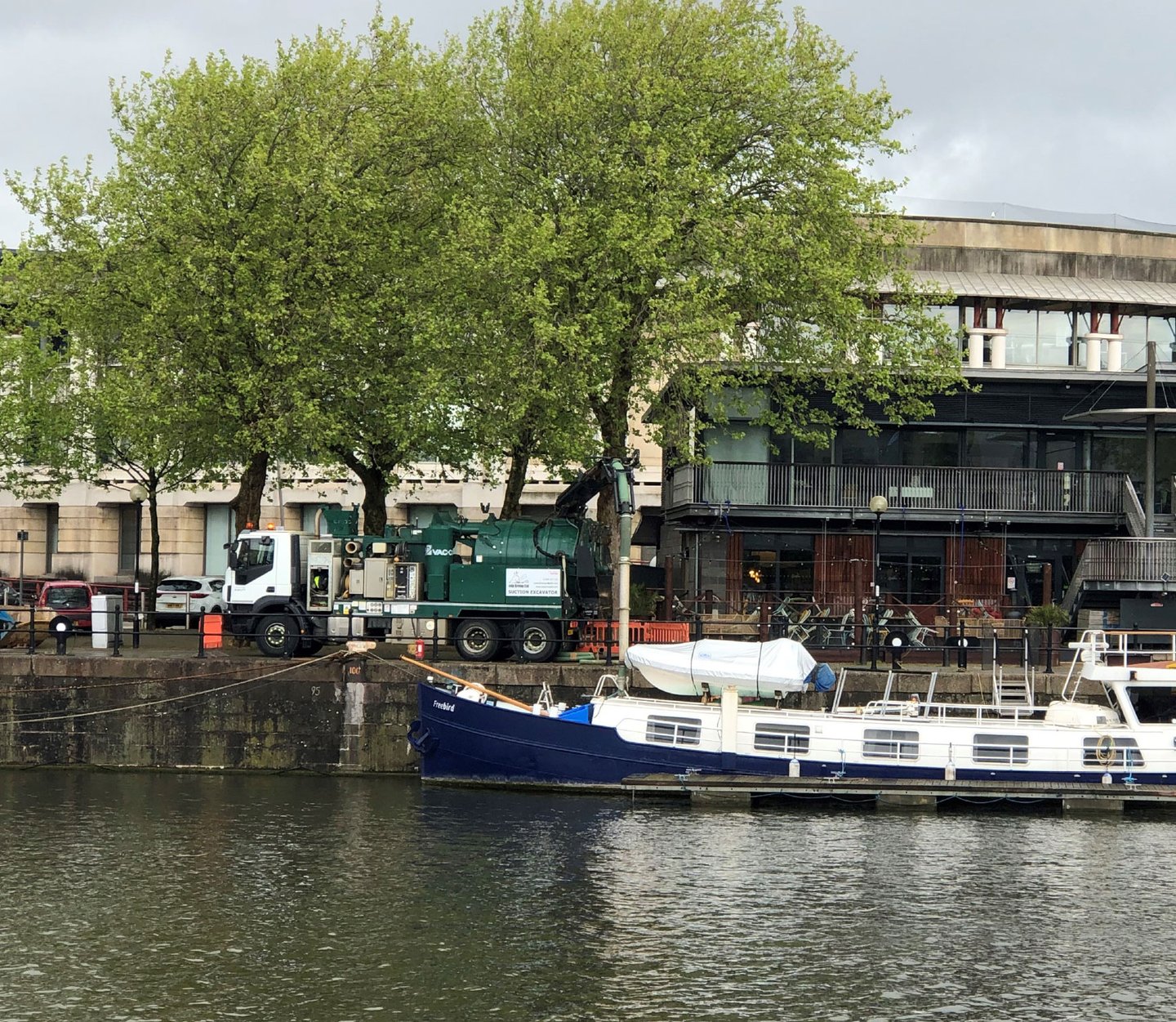
Vacuum Excavation
Operated vacuum excavator hire
Vacuum Excavation is a 100% intrinsically safe system for uncovering and exposing the threat from buried services and a flexible option for removing material from awkward or sensitive areas.
Why vacuum excavation
100% intrinsically safe
How much does a utility strike cost your company? For a utility supplier there is the disruption to supplies, the lost revenue and the negative publicity. As a contractor there are cost implications, delays, and damage to client relationships.
Above all, however, utility strikes can injure operatives and members of the public. Sadly, in some cases, utility strikes can kill. We can stop all of this.
Vacuum Excavation is a 100% intrinsically safe system for uncovering and exposing the threat from buried services and a flexible option for removing material from awkward or sensitive areas leaving any buried utilities, plant and equipment intact and un-damaged.
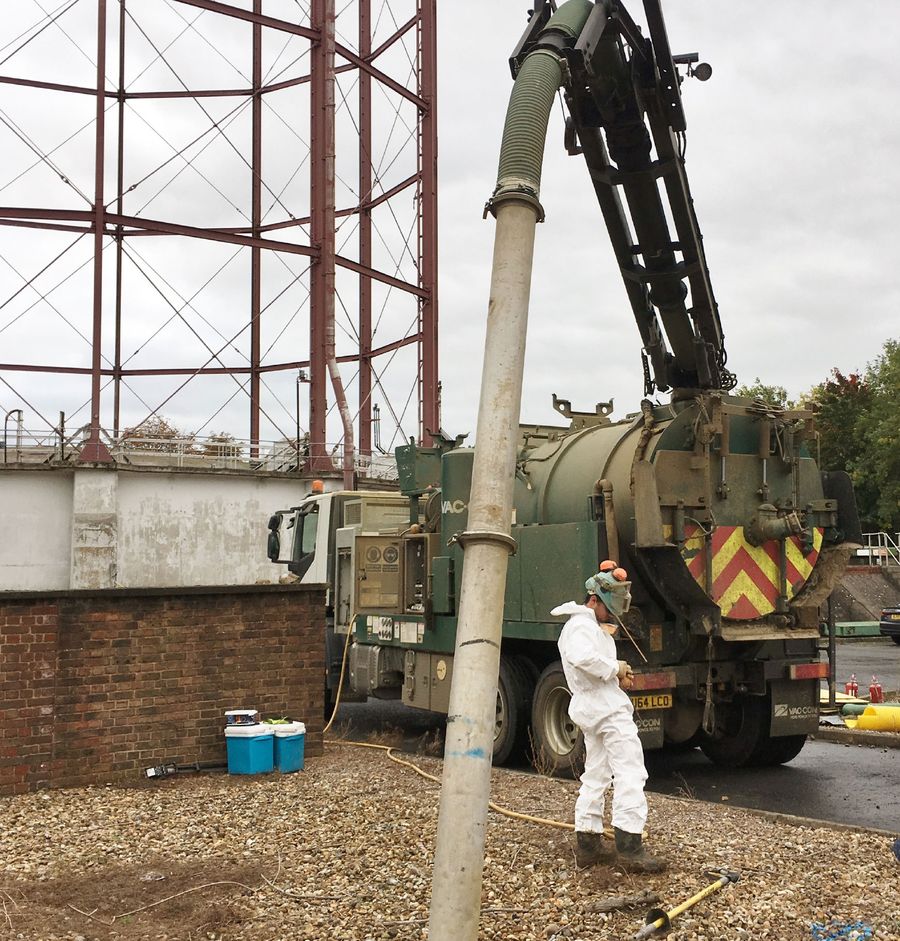
The process
Vacuum excavation process
1a. Hydro jet
Hydro jet is used to deliver high pressure water into the ground, this safely loosens the material by "washing" or "eroding" it into a slurry/wet mix ready for vacuum recovery. The pressures are enough to effectively excavate in all geology but not enough to damage anything.
1b. Air spade
Air Spade tools are used to safely excavate and de-compact the sub base. Pneumatic excavators work by injecting compressed air into the sub base at 1500mph, this jet of compressed air is very effective at breaking up non-cohesive materials whilst still being 100% safe to any sensitive buried objects, utilities and tree roots.
2. Vacuum recovery
After de-compaction of sub base material has been achieved by one of the above methods, the loosened spoil can be safely removed by high performance vacuum; if access is limited the vacuum excavation unit is capable of working at distances of up to 80m from the excavation. Our fleet includes systems with booms for larger pipe diameters and pipes with up to 8" diameters, allowing for faster vacuum excavation and vacuuming of larger diameter bricks, cobbles and rubble.
3. Containment
After the excavation is complete the recovered material is safely contained in a water tight spoils tank or in-line interceptor; this can then be used for back-fill, or if contaminated, transferred for removal.
How it works
Methods of excavation
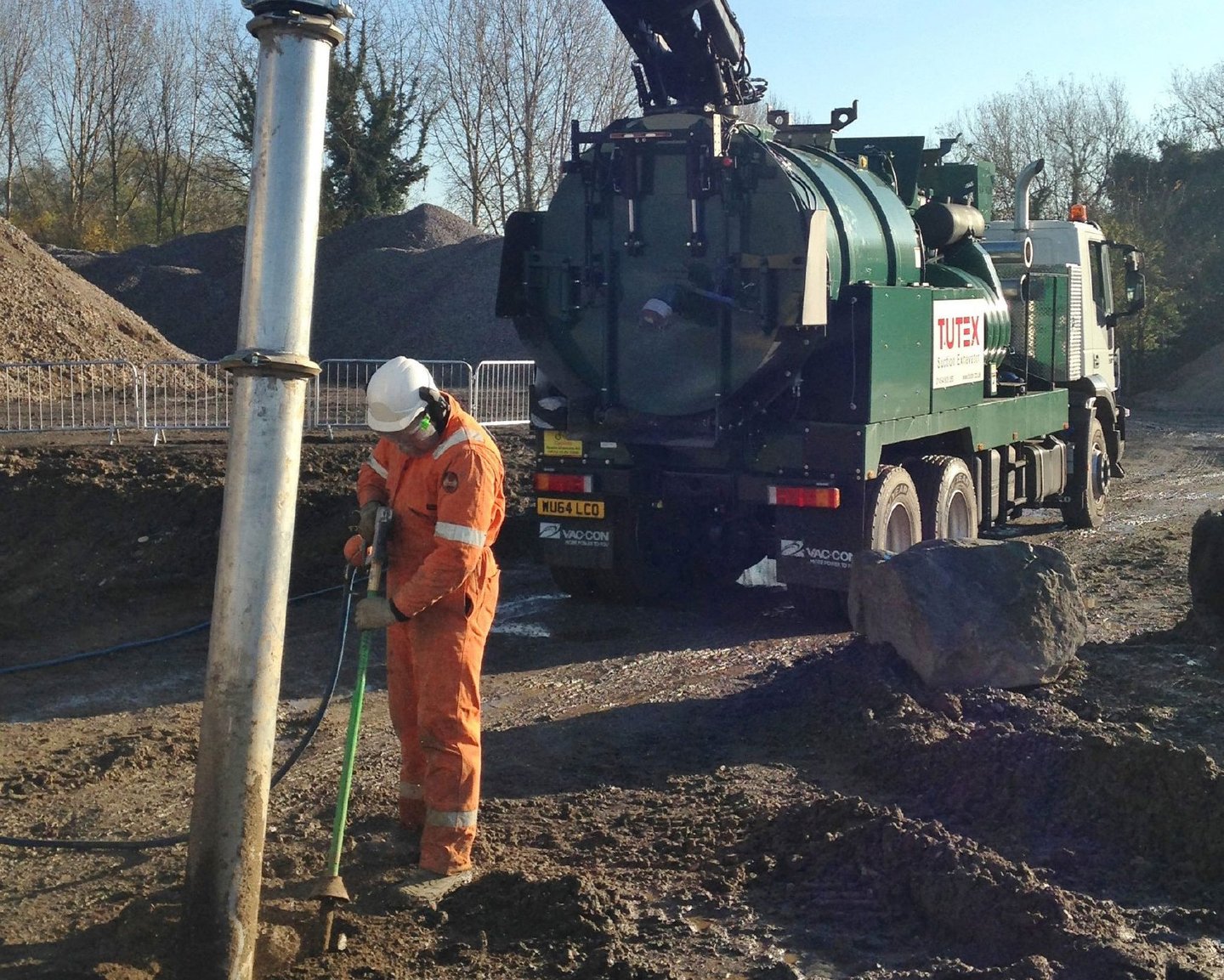
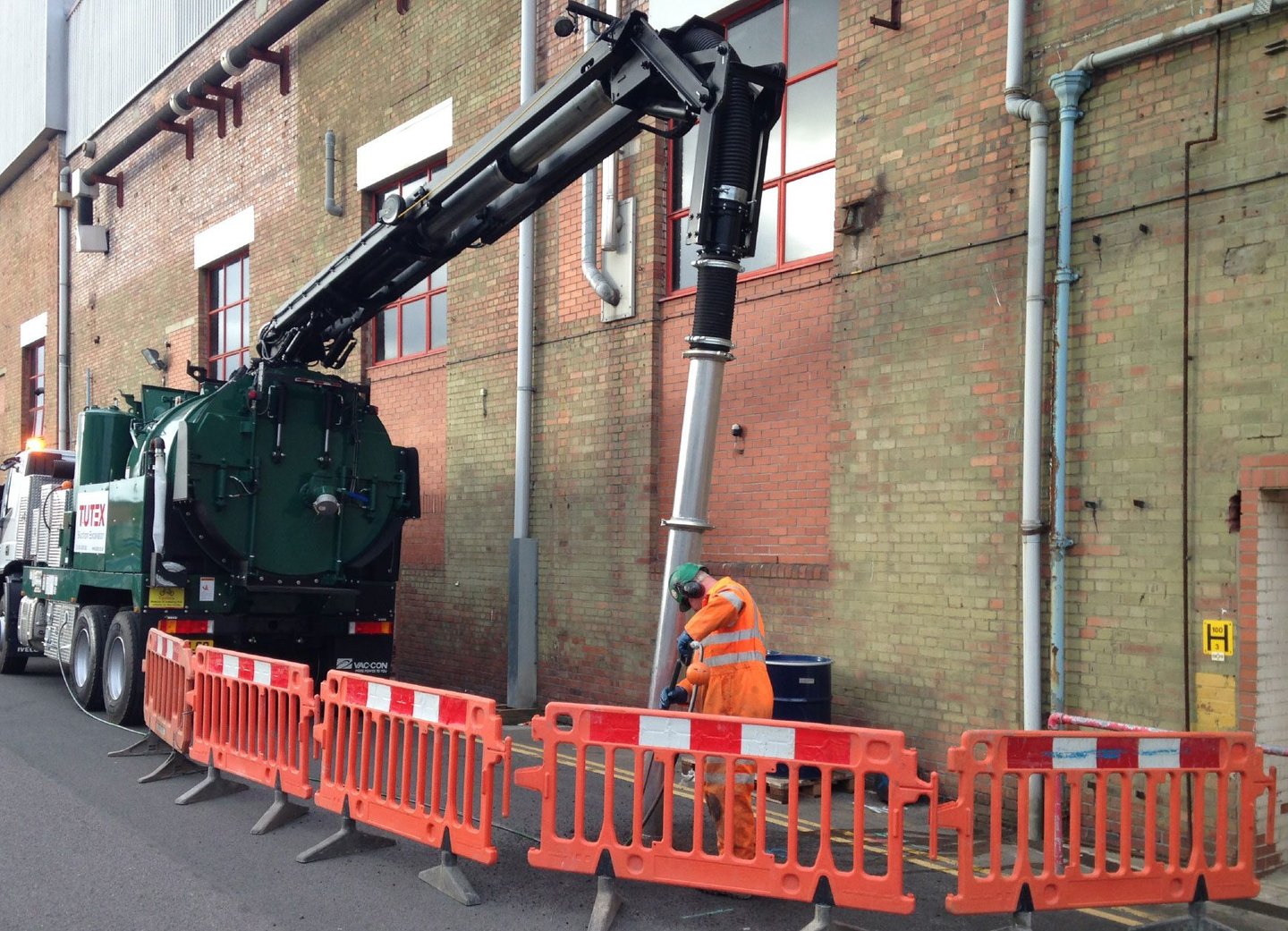
Vacuum (suction)
Vacuum (or suction) Excavation uses a system similar to a vacuum cleaner, it has either a blower, or a large fan, powered by a diesel engine connected to a tank. Vacuum excavation systems don't actually work on a vacuum basis, they rely on the air to act as a catalyst to carry the excavated material into the tank. The blowers pull air up the pipes and into the tank where the material that is being transported in the air flow is in turn dumped into the tank, the air then travels out of the tank, through a filtration system (where we can filter air to around 99.5% fresh air) and out of the blower's exhaust. Large vacuum excavators can transport material up 8" pipes for around 80m-100m.
Hydro method
The hydro system utilises approx 3000psi, this is delivered through a cyclonic "turbo nozzle", the nozzle creates a circular spray type motion and ensures that the water delivered through the lance isn't in a narrow pencil jet, therefore not concentrated enough to damage any buried utility or equipment. This system is very similar to the domestic pressure washer but is around twice as powerful. If buried utilities or apparatus are encountered they are simply left clean and undamaged as the pressurised water finds its easiest path around them, in the surrounding geology. The hydro system is very effective in all geology, this system is also fast, around 50-100% faster than traditional hand digging, the excavated material and added water are then vacuumed into the machine's tank ready for disposal.
Air spade method
As with the hydro systems, the pneumatic system is 100% safe to both the utility/service and the operative. Air is compressed and injected into the ground, this air decompresses once in the ground and reverts to atmospheric pressures, thus breaking down and pulverising the geology; allowing for safe removal via on-board vacuum systems. Air is compressible, meaning upon encountering impervious objects and materials, the air compresses and goes around it, leaving items such as utilities, ducts, pipe, cables and fibre-optics untouched. This also means however, that air/pneumatic excavation isn't suitable for excavating in cohesive geology such as clay and PFA, for safe excavation in these types of materials hydro systems must be used. The air/pneumatic excavators utilised by ADP are also 100% safe to the operative due to them being ZERO vibratory and tested to withstand 100,000 volts.
Where it's used
Vacuum excavation applications
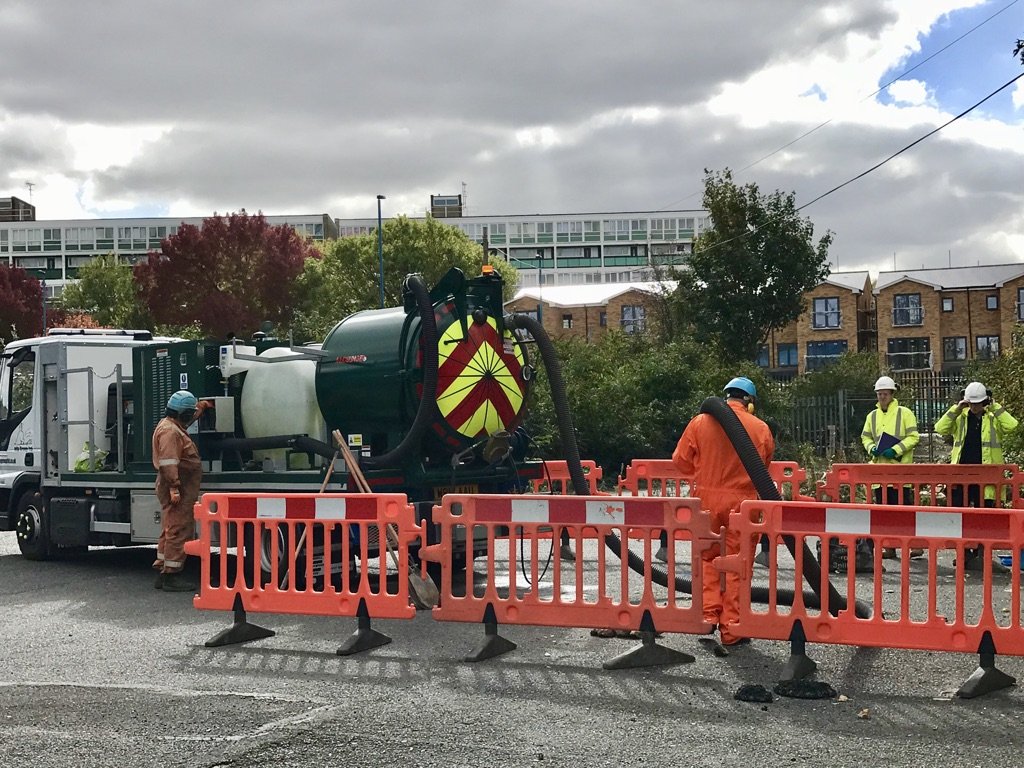
- Safe slip trenching around all utilities
- Safe excavation in material contaminated with asbestos and hydrocarbons
- Industrial cleaning of powders/dust
- Guaranteed service clearance
- Pre-drilling boreholes
- Silt clearance from monitoring wells
- Bentonite/mud/slurry removal
- Activated carbon removal
- Well installation at depths of up to 3m
- Railway ballast removal
- Silt removal from drains
- Safe tree root exposure